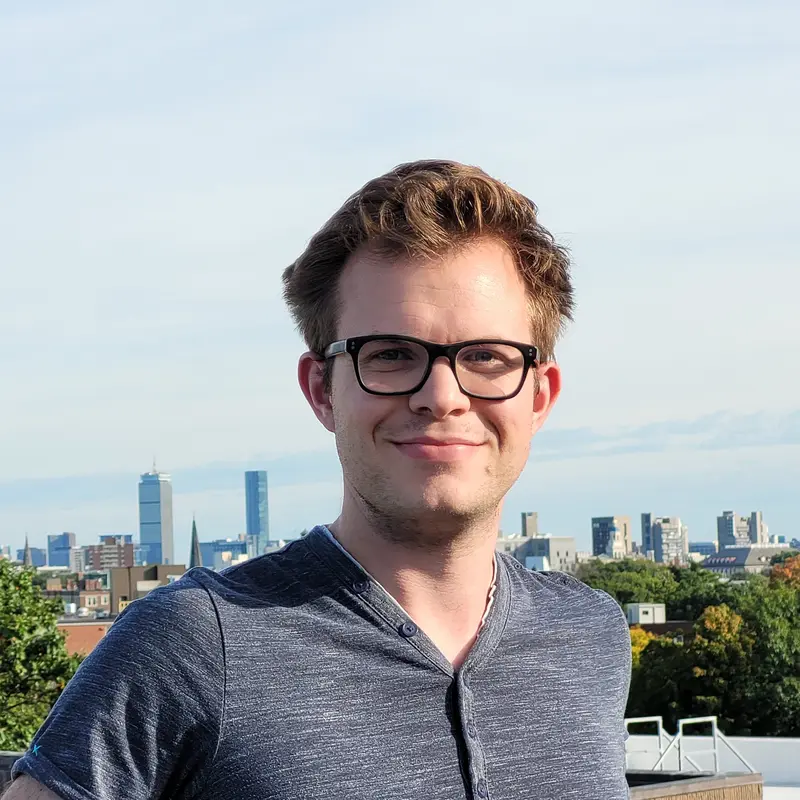
Oliver Zier
Postdoctoral Researcher in Astrophysics
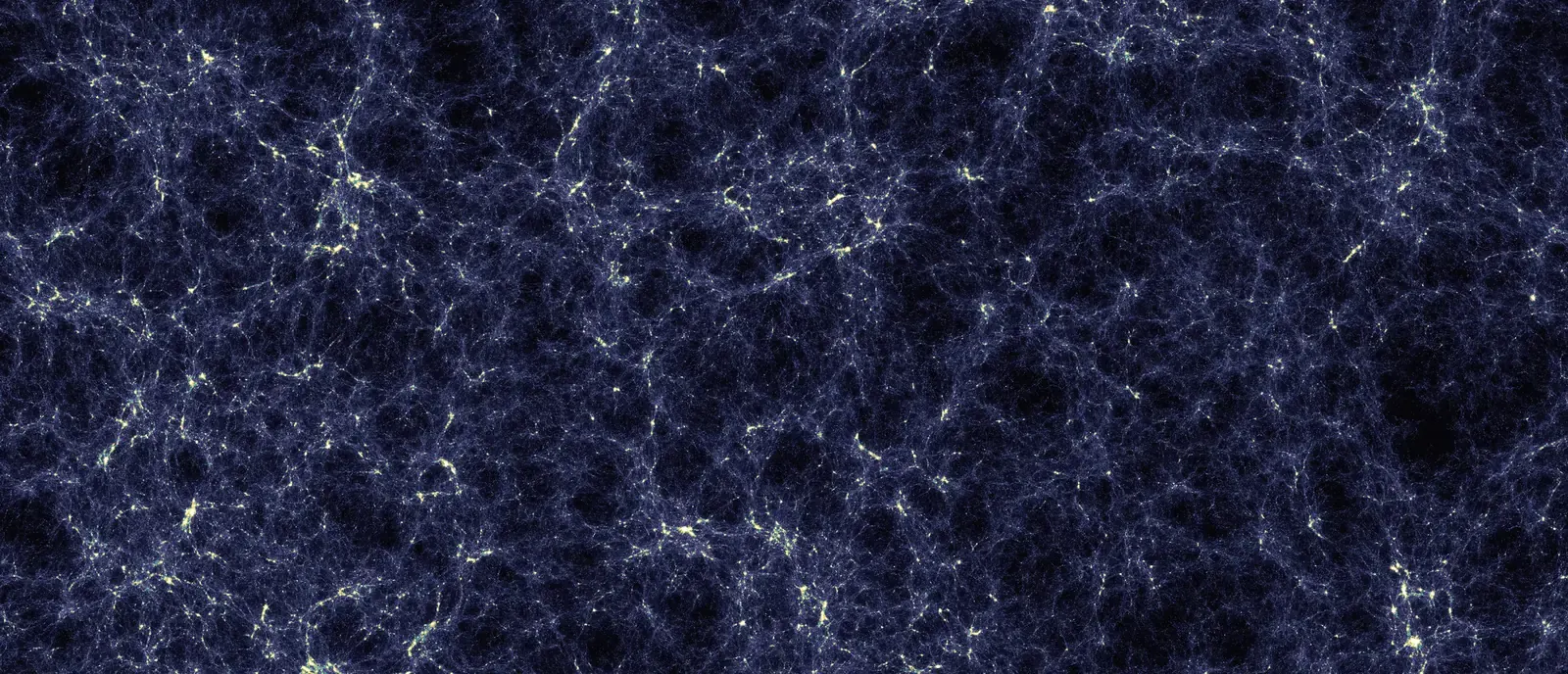
I develop and run large-scale simulations of cosmic reionization and galaxy formation using the moving-mesh code AREPO, working at the intersection of computational physics and astrophysics.
About
Computational astrophysicist studying the first light in the universe.
I'm an ITC Fellow at the Center for Astrophysics | Harvard & Smithsonian. My research centers on simulating cosmic reionization — the epoch when the first stars and galaxies ionized the intergalactic medium, fundamentally transforming the universe.
I work with AREPO, a moving-mesh hydrodynamics code, to study how radiation, gravity, and gas dynamics interact in the early universe. As part of the THESAN project, I investigate how reionization shaped the first galaxies.
Before Harvard, I was a postdoc at MIT with Mark Vogelsberger. I earned my PhD in 2023 at the Max Planck Institute for Astrophysics in Garching, working with Volker Springel on protoplanetary disk simulations and numerical methods for moving-mesh codes.
My background spans Physics and Computer Science (University of Bayreuth) and Mathematical & Theoretical Physics (LMU Munich). I'm originally from Wunsiedel in northern Bavaria.
Quick Facts
- Current Position
- ITC Fellow, CfA | Harvard & Smithsonian
- Research Focus
- Cosmic reionization, radiation hydrodynamics, numerical methods
- Codes
- AREPO, AREPO-RT, GADGET-4
- PhD
- MPA Garching, 2023 (Volker Springel)
- Affiliations
- THESAN AREPO GADGET-4
Research
My work spans cosmic reionization, radiation hydrodynamics, magnetohydrodynamics, disk physics, and numerical methods.
Cosmic Reionization & Galaxy Formation
Simulating the epoch when the first stars and galaxies ionized the intergalactic medium, using the THESAN-ZOOM project to study Population III star formation and the long-term impact of reionization on galaxy evolution.
Learn moreRadiation Hydrodynamics & AREPO Development
Developing and optimizing radiation transport methods for the AREPO moving-mesh code, including GPU acceleration and efficient parallel communication for exascale simulations.
Learn moreMagnetohydrodynamics on a Moving Mesh
Implementing non-ideal MHD effects — Ohmic diffusion, ambipolar diffusion, and the Hall effect — enabling accurate simulations of magnetized, weakly-ionized astrophysical environments.
Learn moreAccretion Disks & Disk Instabilities
Studying gravitational, magnetorotational, and Rossby wave instabilities in protoplanetary disks using the shearing box approximation implemented in AREPO.
Learn moreNumerical Methods & High-Performance Computing
Improving the accuracy of moving-mesh hydrodynamics through higher-order flux integration, contributing to major simulation codes including AREPO and GADGET-4, and leveraging vectorized and GPU-accelerated kernels.
Learn moreSelected Publications
A selection of recent and representative work. See the full list for all papers.
- 2025Reionization
The THESAN-ZOOM project: Population III star formation continues until the end of reionization
Oliver Zier, Rahul Kannan, Aaron Smith, Ewald Puchwein, Mark Vogelsberger, Josh Borrow, Enrico Garaldi, Laura Keating, William McClymont, Xuejian Shen, Lars Hernquist
accepted by MNRAS
- 2025Reionization
The THESAN-ZOOM project: Long-term imprints of external reionization on galaxy evolution
Oliver Zier, Rahul Kannan, Aaron Smith, Ewald Puchwein, Mark Vogelsberger, Josh Borrow, Enrico Garaldi, Laura Keating, William McClymont, Xuejian Shen, Lars Hernquist
accepted by MNRAS
- 2024HPC / GPU
Adapting AREPO-RT for exascale computing: GPU acceleration and efficient communication
Oliver Zier, Rahul Kannan, Aaron Smith, Mark Vogelsberger, Erkin Verbeek
MNRAS 533(1), 268–286
- 2024Non-ideal MHD
Non-ideal magnetohydrodynamics on a moving mesh II: Hall effect
Oliver Zier, Alexander C. Mayer, Volker Springel
MNRAS 527(1), 8355–8368
- 2024Non-ideal MHD
Non-ideal magnetohydrodynamics on a moving mesh I: Ohmic and ambipolar diffusion
Oliver Zier, Volker Springel, Alexander C. Mayer
MNRAS 527(1), 1563–1579
- 2021Code Development
Simulating cosmic structure formation with the GADGET-4 code
Volker Springel, Rüdiger Pakmor, Oliver Zier, Martin Reinecke
MNRAS 506(2), 2871–2949
Academic Path
Positions, education, and the journey so far.
ITC Fellow / Postdoctoral Researcher
Center for Astrophysics | Harvard & Smithsonian · Cambridge, MA
Simulations of cosmic reionization with the THESAN project.
Postdoctoral Researcher
Massachusetts Institute of Technology (MIT) · Cambridge, MA
Research group of Mark Vogelsberger. Radiation hydrodynamics and GPU acceleration of AREPO-RT.
PhD in Astrophysics
Max Planck Institute for Astrophysics (MPA) · Garching, Germany
Supervisor: Volker Springel. Dissertation on protoplanetary disk simulations and numerical methods for the moving-mesh code AREPO.
M.Sc. Mathematical & Theoretical Physics
Ludwig Maximilian University of Munich (LMU) · Munich, Germany
Master's thesis on Milky Way–like disk simulations with GADGET-3.
B.Sc. Physics & B.Sc. Computer Science
University of Bayreuth · Bayreuth, Germany
Bachelor's thesis on low-Prandtl-number convection in liquid mercury.
Beyond Research
When I'm not running simulations, you can usually find me outdoors or at the chessboard.
Hiking
Alpine trails and Bavarian mountains
Bouldering
Indoor and outdoor climbing
Swimming
Lakes, pools, and the occasional ocean
Chess
Always up for a game
Contact
Feel free to reach out — I'm always happy to discuss research, potential collaborations, or just say hello.
Mailing Address
Oliver Zier
Institute for Theory and Computation
Center for Astrophysics | Harvard & Smithsonian
60 Garden St., MS 51
Cambridge, MA 02138